

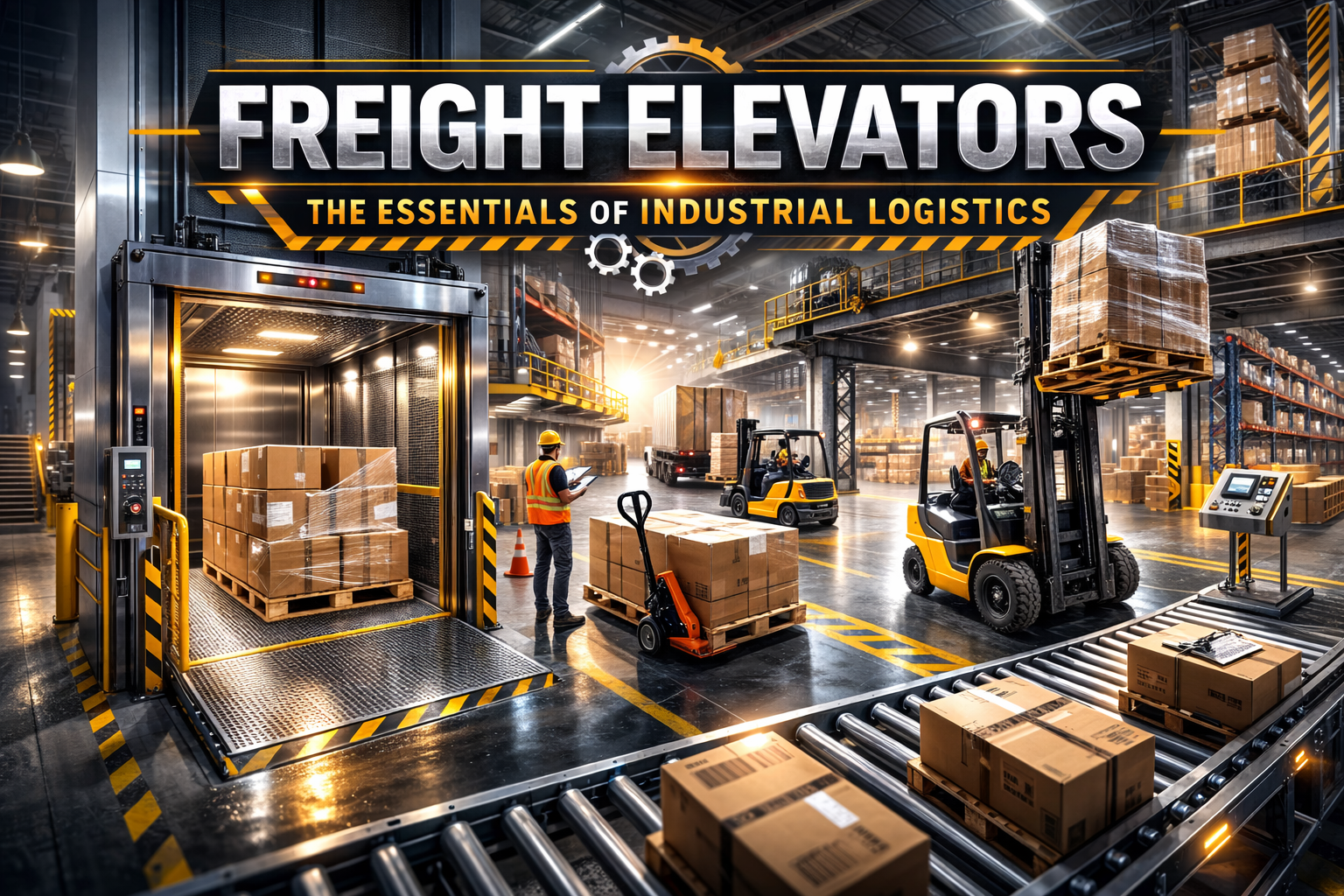
The efficiency of industrial supply chains and production processes largely depends on the ability to move, lift, and position heavy and bulky loads quickly and safely. In this context, the industrial freight elevator plays a central role. Specifically designed for vertical material handling, it enables efficient transportation of goods between different production or storage levels. Its robust design, tailored to modern industrial needs, provides reliable and safe solutions to productivity challenges.
Why Is the Freight Elevator the Engine of Your Productivity?
Intelligent use of space is a major challenge for site managers. By enabling the utilization of vertical space in industrial facilities (mezzanines, storage floors), the freight elevator transforms an architectural constraint into a logistical opportunity.
1. Enhanced Operational Efficiency
Manual transport or makeshift solutions between levels is slow, inefficient, and prone to errors. A properly designed freight elevator not only reduces transfer times for goods but also streamlines the supply of production lines and optimizes inventory rotation across multiple levels. This acceleration of processes directly contributes to the overall efficiency of the facility. Over the long term, a freight elevator represents a profitable investment, capable of lowering operational costs while generating sustainable savings.
2. The Industrial Freight Elevator: The Lift for Goods
The freight elevator is a robust vertical transport system, specifically designed for moving goods between different levels in industrial structures such as warehouses, factories, or production sites.
2.1 Definition and Role
The primary role of the freight elevator is to ensure continuity in vertical logistics flow. It enables the transportation of pallets, containers, forklifts, or other heavy equipment from one level to another, whether in a warehouse, manufacturing plant, distribution center, or specialized facility.
2.2 Types of Freight Elevators
Industrial freight elevators are mainly divided into two categories, based on their lifting mechanism:
2.2.1 Electric
- Operating Mechanism: Uses a motor, cables, and counterweights (similar to a conventional elevator).
- Key Advantages: Suited for greater heights and higher travel speeds. Offers energy efficiency over long travel distances.
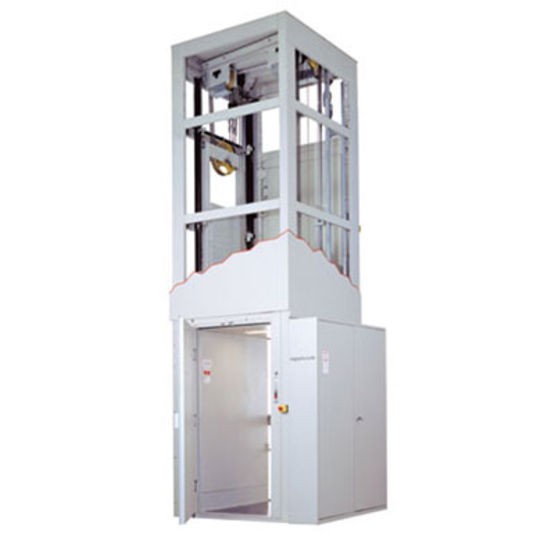
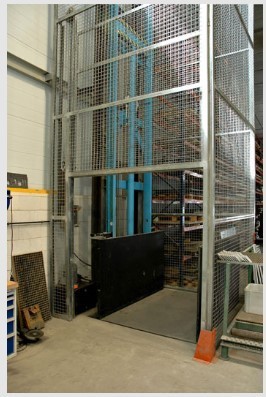
Hydraulic Freight Elevator
3. Sectoral Applications
The versatility of the freight elevator makes it indispensable across a wide range of sectors, as highlighted in the introduction:
- Retail: Transport of stock and pallets between storage areas and sales floors.
- Pharmaceutical and Aerospace Industries: Movement of sensitive materials or large components in environments with strict compliance standards.
- Factories: Integration into production lines for transferring parts or semi-finished products between workshops.
4. Workplace Safety: A Strategic Investment
Handling heavy loads is the leading cause of musculoskeletal disorders (MSDs) in industrial settings. Installing a freight elevator that complies with Tunisian regulations and the Labor Code represents a direct investment in the health of your workforce. Equipped with essential safety features—door interlocks, load limiters, anti-fall devices, and emergency stops—it minimizes the risk of accidents while optimizing operational performance and continuity.
5. Towards Logistics 4.0
The future of industrial freight elevators lies in their integration into the connected factory. Thanks to the Internet of Things (IoT), modern equipment now enables predictive maintenance, reducing unexpected downtime. Some models even interface directly with warehouse management systems (WMS) for fully automated material flow.
The industrial freight elevator is much more than a simple lifting tool: it is a pillar of efficiency and safety in the industrial environment. It ensures the massive and continuous vertical flow of goods, allowing companies to transport pallets or heavy loads between different levels quickly and safely. By choosing the freight elevator suited to their needs, companies optimize vertical logistics, streamline production, and enhance profitability.
📩 Need to reduce errors and save time in your operations?
Website: www.amecexport.tn
Email: Commercial@amec-export.tn
Phone: +216 92 484 998


