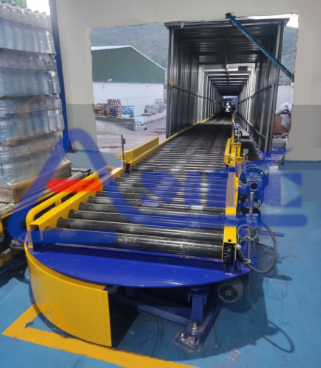


In short, a conveyor is a mechanism or machine that allows the transport of a single load (boxes, bins, bags, etc.) or bulk products (soil, powder, food, etc.) continuously along a predetermined path.
Indeed, there are several types of conveyors, among which we can mention:
-Chain Conveyor:
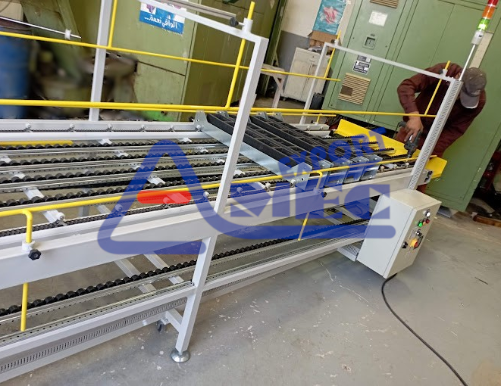
Chain conveyors consist of two or more strands that carry a typically large chain on which the load rests, usually placed on pallets or special crates. They are mainly used for transporting very heavy loads, large-sized items, or goods exposed to high temperatures.
-Belt Conveyor (or Treadmill):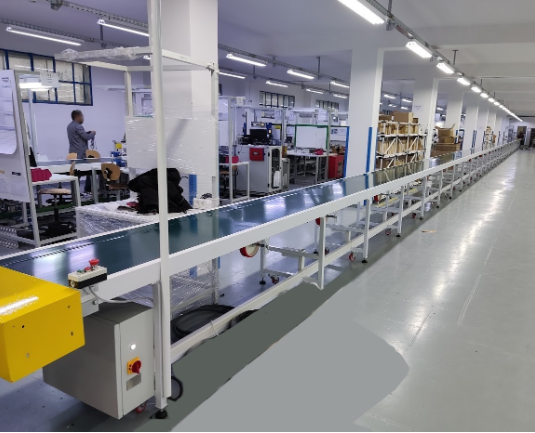
Belt conveyors are essential transfer equipment in interrupted production lines.
They are widely used in industries such as food processing, cement, brick manufacturing, and automotive wiring.
Belt conveyors are suitable for transporting bulk materials in straight lines, curves, or Z-shaped paths, without load interruption or transfer elements. The material and type of belts are determined by our design office to ensure that your equipment is as cost-effective and well-suited as possible to your technical and financial requirements.
-Transporteurs par gravité:
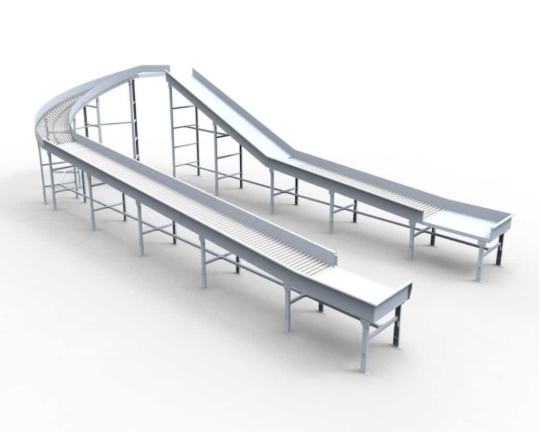
Gravity conveyors are particularly suitable in cases where it is not necessary to move the goods using a specific type of drive and/or due to the characteristics of the route. The product can move either because of the force of the preceding packages or due to the incline of a part of the conveyor line.
They are mainly characterized by the use of rollers based on light bearings or ball-row heads, which makes the starting effort of the rollers very low.
-Powered Roller Conveyors: